Surface preparation: The road surface is cleaned and dried to remove dust, dirt, and moisture.
Pre-marking: The required lines, symbols, or patterns are marked on the road.
Heating: Thermoplastic material is heated to approximately 180–200°C until it melts.
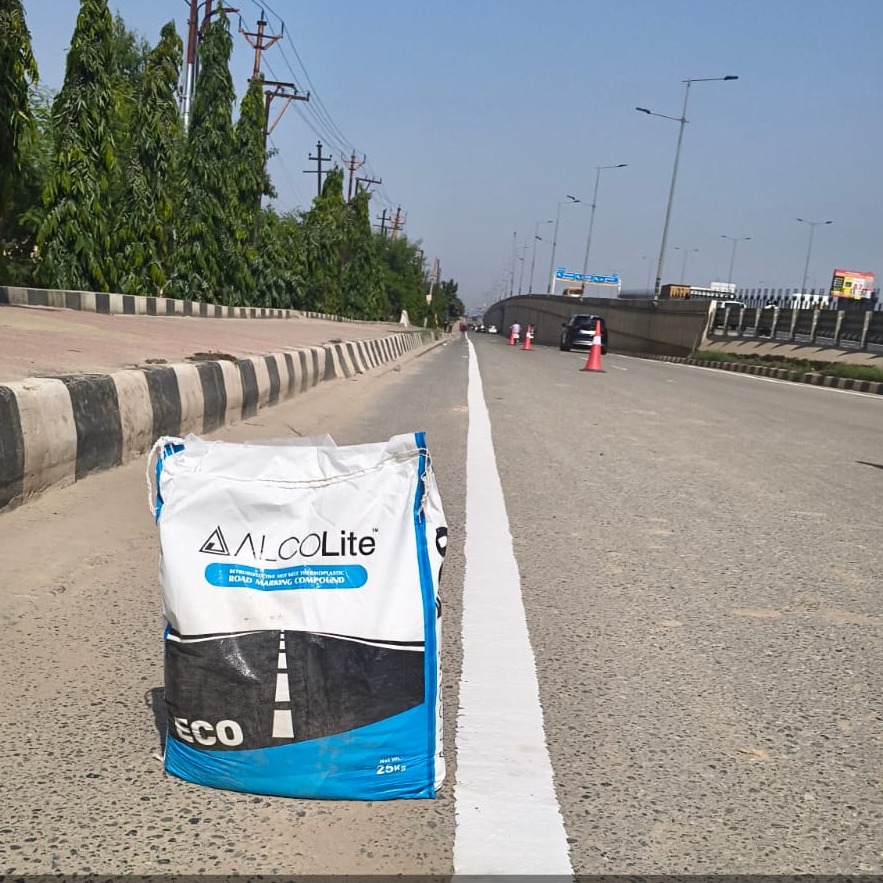
Application: The molten material is applied to the road using a specialised marking machine.
Glass beads: Reflective glass beads are added to improve visibility, especially at night.
Cooling: The material cools and solidifies quickly, forming a durable road marking.
Inspection: The markings are checked for proper thickness, alignment, visibility, and adhesion.